


Blog
- 2026-09-29
- Finox Pellets Industries
Potassium Bicarbonate vs Potassium Carbonate: Understanding the Difference
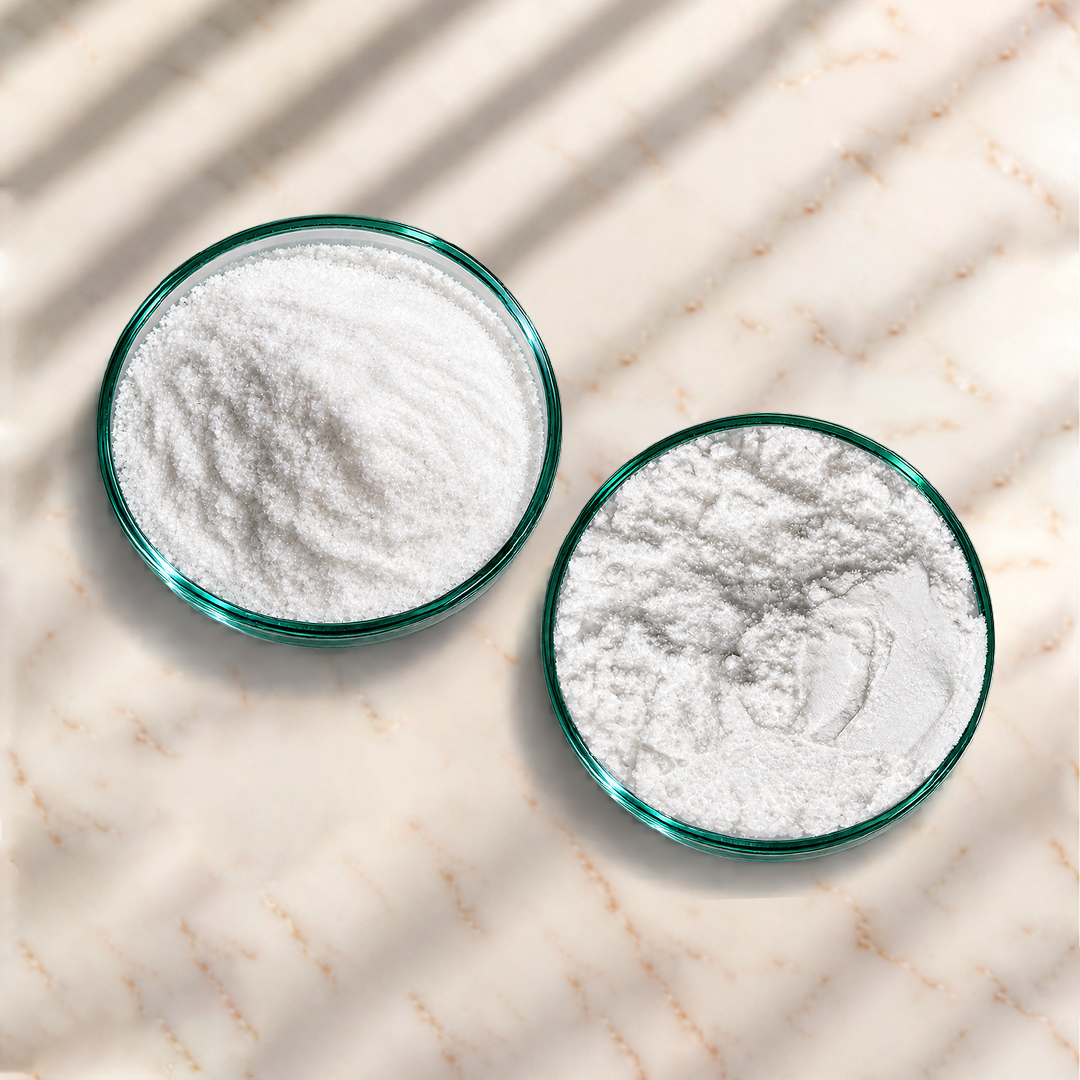
Potassium bicarbonate and potassium carbonate are both potassium-based inorganic salts, commonly supplied as white powders. Although they may look similar, they are different chemical compounds with different compositions and properties.
For manufacturers, this distinction matters when selecting a raw material for a formulation or chemical process. The right choice depends on the required chemical function, alkalinity and process conditions.
What Is Potassium Bicarbonate?
Potassium bicarbonate has the chemical formula KHCO₃.
It is generally supplied as a white powder and provides potassium together with bicarbonate. It is used in selected food, pharmaceutical, chemical and technical applications where its particular chemical properties are required.
The appropriate grade and specification depend on the intended application.
What Is Potassium Carbonate?
Potassium carbonate has the chemical formula K₂CO₃ and is commonly supplied as a white powder or crystalline solid.
It is an alkaline potassium salt with high water solubility and is used in applications including chemical manufacturing, glass production, specialty chemicals and selected pharmaceutical,
Potassium Bicarbonate vs Potassium Carbonate
The most important difference is their chemical composition.
|
Feature |
Potassium Bicarbonate |
Potassium Carbonate |
||
|---|---|---|---|---|
|
Chemical formula |
KHCO₃ |
K₂CO₃ |
||
|
Chemical type |
Bicarbonate salt |
Carbonate salt |
||
|
Typical appearance |
White powder |
White powder or crystalline solid |
||
|
Alkalinity |
Mildly alkaline |
More strongly alkaline |
||
|
Potassium source |
Yes |
Yes |
|
|
|
Typical role |
Used where bicarbonate properties are required |
Used where stronger alkalinity and carbonate chemistry are required |
Because their chemistry is different, the two materials should not automatically be treated as interchangeable.
Where Is Potassium Bicarbonate Used?
Potassium bicarbonate is used in selected applications where bicarbonate chemistry and its associated properties are required.
Food and Ingredient Applications
It can be used in selected food and ingredient applications where a potassium-based bicarbonate is appropriate.
Pharmaceutical Applications
Selected pharmaceutical and healthcare-related formulations may use potassium bicarbonate where the required grade and specification are suitable.
Chemical and Technical Applications
Potassium bicarbonate can also be used as a potassium-containing raw material or reagent in selected chemical and technical processes.
The required grade depends on the application and applicable specifications.
Where Is Potassium Carbonate Used?
Potassium carbonate has established applications across several industrial sectors, including:
- Glass manufacturing
- Chemical manufacturing
- Specialty chemical production
- Pharmaceutical and laboratory applications
- Agrochemical processes
- Selected food and ingredient applications
- pH adjustment and neutralization
Its high water solubility and alkaline character make it suitable for processes requiring a soluble potassium-based alkali.
For a detailed discussion, see our related article: Potassium Carbonate: Properties, Applications and Industrial Uses.
Can Potassium Bicarbonate Replace Potassium Carbonate?
Not as a general substitution.
Although both contain potassium, their different chemical compositions mean they can behave differently within a formulation or reaction.
Before considering substitution, the process should be evaluated for:
- Required alkalinity
- Reaction chemistry
- pH requirements
- Stoichiometry
- Processing conditions
- Compatibility with other materials
- Final product specifications
A substitute should therefore be assessed against the actual requirements of the process rather than selected solely because both products contain potassium.
How to Choose the Right Product
When selecting between potassium bicarbonate and potassium carbonate, start with the application.
Chemical Function
Determine what the material needs to contribute to the process — for example, potassium, alkalinity or a specific reaction function.
Grade and Purity
The required purity depends on the intended use. The product specification should match the application and applicable requirements.
Physical Characteristics
Particle size, powder characteristics and moisture can influence storage, handling and incorporation into a process.
Documentation
Depending on the application, buyers may require:
- Certificate of Analysis (COA)
- Technical Data Sheet (TDS)
- Safety Data Sheet (SDS/MSDS)
- Product specification
Why Consistent Specification Matters
For industrial users, selecting the correct chemical is only part of the process.
Consistent purity and physical characteristics help manufacturers maintain predictable raw-material performance from batch to batch. This is particularly important where the material forms part of a controlled formulation or chemical reaction.
For this reason, product specification and technical documentation are important parts of supplier selection.
Frequently Asked Questions
Are potassium bicarbonate and potassium carbonate the same?
No. Potassium bicarbonate is KHCO₃, while potassium carbonate is K₂CO₃. They are different chemical compounds.
Which is more alkaline?
Potassium carbonate is more strongly alkaline than potassium bicarbonate.
Can potassium bicarbonate replace potassium carbonate?
Not automatically. Suitability depends on the formulation, reaction chemistry, process conditions and required specification.
Are both products supplied as powders?
Potassium bicarbonate is commonly supplied as a white powder, while potassium carbonate is commonly supplied as a white powder or crystalline solid.
How should I choose between them?
Start with the intended application and determine the required chemical function, alkalinity, grade, purity and physical characteristics.
Final Thought
Potassium bicarbonate and potassium carbonate may look similar, but they have different chemical compositions and therefore different roles in industrial and formulation processes.
The right choice comes down to what the process requires, not simply which potassium compound is available.
At Finox Pellets Industries, product selection can be discussed according to the required grade, specification, quantity and packaging requirements.
Looking for Potassium Bicarbonate or Potassium Carbonate?
Contact Finox Pellets Industries to discuss your application and product requirements.
Location
Plot No. 86/4,Phase-1, GIDC Vatva, Ahmedabad-382 445, Gujarat, India.