


Blog
- 2026-09-29
- Finox Pellets Industries
Sodium Hydroxide Pellets vs Powder: Understanding the Difference
Sodium hydroxide is used across many chemical and industrial processes where a strong alkali is required. It is commonly supplied in solid forms such as pellets and powder, giving manufacturers different options for handling, dosing, storage and processing.
Although both forms contain the same chemical compound — sodium hydroxide (NaOH) — their physical characteristics can influence how easily the material fits into a particular process.
For a manufacturer, the question is therefore not simply which form is better. The more useful question is: which form is better suited to the way the material will be handled and used?
What Is Sodium Hydroxide?
Sodium hydroxide (NaOH), commonly known as caustic soda, is a strong inorganic alkali widely used in chemical processing and manufacturing.
In solid form, sodium hydroxide is generally white and highly hygroscopic, meaning it readily absorbs moisture from the surrounding atmosphere. It is also highly soluble in water, making it suitable for processes where a concentrated alkaline solution needs to be prepared.
Because sodium hydroxide is strongly corrosive, its packaging, storage and handling require appropriate controls.
Sodium Hydroxide Pellets
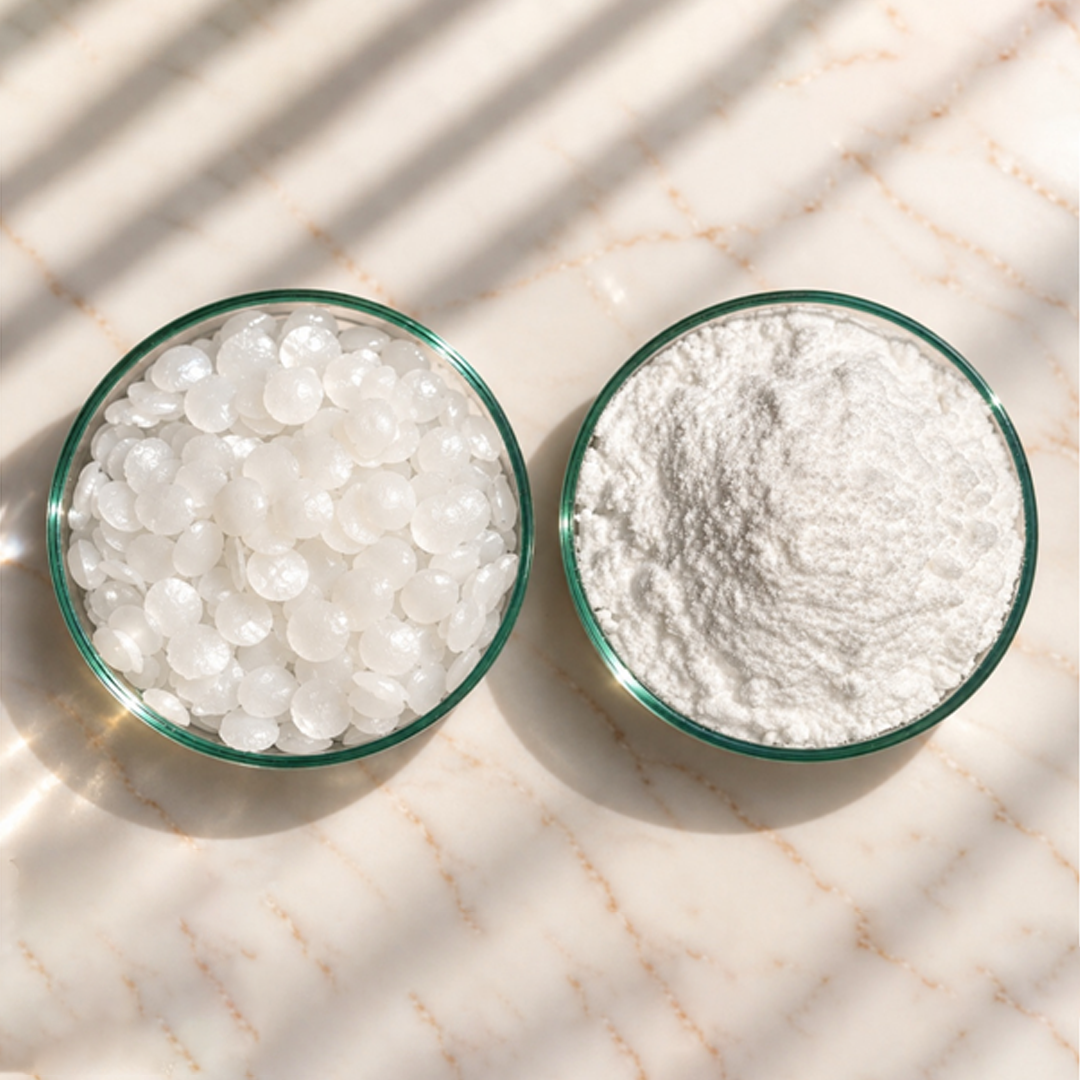
Sodium hydroxide pellets are compact, solid particles of NaOH.
Their relatively uniform physical form can make them convenient for:
- Weighing and controlled addition
- Batch processing
- Storage and transportation
- Handling where minimizing loose fine material is important
Pellets are often selected when a process requires a solid alkali that can be measured and added in controlled quantities.
The actual pellet size, purity and specification can vary between products, so the relevant product specification should always be checked before selection.
Sodium Hydroxide Powder
Sodium hydroxide powder consists of finer NaOH particles.
The finer physical form can be useful in processes where rapid incorporation or fine addition of the material is required. At the same time, fine particles require greater attention during handling because dust generation and moisture exposure can become more significant considerations.
As with pellets, the appropriate grade, purity and physical characteristics depend on the intended application.
Sodium Hydroxide Pellets vs Powder: What Is Actually Different?
The chemical compound remains NaOH in both forms. The main difference is physical rather than chemical.
| Feature |
|
Sodium Hydroxide Powder | |
|---|---|---|---|
| Physical form | Compact solid particles | Fine particles | |
| Handling | Generally convenient for weighing and controlled addition | Requires greater care to minimize dust | |
| Dosing | Well suited to controlled batch addition | Useful where finer addition is required | |
| Dissolution | Dissolves readily in water | Fine particles can dissolve readily when properly handled | |
| Moisture sensitivity | High | High | |
| Storage | Requires tightly sealed, moisture-resistant packaging | Requires tightly sealed packaging with particular attention to moisture exposure | |
| Process preference | Often selected for controlled handling and dosing | May be selected where finer material is preferred |
There is no universal rule that one form is better than the other. The appropriate choice depends on the customer's process, equipment, handling method and method of addition.
Why Does Physical Form Matter?
In chemical manufacturing, a raw material does not exist in isolation. It has to fit into an existing process.
The way sodium hydroxide is received, stored, weighed and added can affect day-to-day production.
For example, a manufacturer working with controlled batch additions may prefer a compact solid form that is straightforward to weigh and transfer. Another process may require finer material because of the way the alkali is incorporated into the formulation.
This is why physical form should be considered alongside purity and chemical specification rather than treated as a separate purchasing decision.
How to Choose Between Sodium Hydroxide Pellets and Powder
The right form depends on several practical factors.
1. Process Requirements
Start with the process itself.
How is the sodium hydroxide added? Is it manually weighed, batch-dosed or incorporated through a particular feeding system?
The answers can help determine which physical form is more convenient.
2. Handling and Dosing
Consider how the material will be transferred and measured.
Pellets can offer convenient handling for controlled addition, while powder may be appropriate where finer material is required.
3. Dissolution Requirements
If solid sodium hydroxide is dissolved before use, the process should be evaluated for how the selected physical form behaves during addition and dissolution.
The equipment and operating method are just as important as the form of the raw material.
4. Packaging and Storage
Sodium hydroxide readily absorbs moisture from the atmosphere. Packaging therefore needs to protect the material from unnecessary moisture exposure.
Storage conditions should also be considered before deciding on the most suitable product format.
5. Grade and Purity
Physical form is only one part of product selection.
The required grade, assay and impurity specifications should match the intended application. A suitable form with an unsuitable specification is still the wrong material for the process.
6. Technical Documentation
Depending on the application, buyers may require documents such as:
- Certificate of Analysis (COA)
- Technical Data Sheet (TDS)
- Safety Data Sheet (SDS/MSDS)
These documents allow the customer to compare the supplied material against the requirements of the process.
What Should Buyers Check Before Ordering?
Before selecting sodium hydroxide pellets or powder, it is useful to establish the following:
Application
Where and how will the sodium hydroxide be used?
Grade and purity
What assay and impurity limits are required?
Physical form
Is the process better suited to pellets or powder?
Packaging
Will the packaging adequately protect the material from moisture?
Quantity
What quantity is required per batch and over the expected supply period?
Documentation
Are COA, TDS and SDS/MSDS required?
Consistency
Can the supplier maintain the same specification and physical form from batch to batch?
Looking at these points together makes product selection much more straightforward.
Handling and Storage of Sodium Hydroxide
Sodium hydroxide is a strongly corrosive material and should be handled by personnel familiar with chemical safety procedures.
The material should be kept in suitable, tightly closed packaging and protected from moisture and humidity. When handling solid NaOH, appropriate protective equipment should be used, and unnecessary dust generation should be avoided.
For specific handling, storage and emergency requirements, the applicable Safety Data Sheet and workplace chemical-safety procedures should always be followed.
Why Consistency Matters
For industrial users, choosing the right physical form is only the beginning.
Consistent purity, physical characteristics and packaging can make a difference to routine production. Changes in the raw material can affect weighing, dosing, dissolution or other parts of the process.
This is why many manufacturers look beyond the product name when selecting a chemical supplier. Specification, consistency, documentation and supply reliability all form part of the decision.
Frequently Asked Questions
Are sodium hydroxide pellets and powder the same chemical?
Yes. Both are sodium hydroxide (NaOH). The primary difference discussed here is their physical form and the way that form fits into a particular process.
Which is better: sodium hydroxide pellets or powder?
Neither form is universally better. The appropriate choice depends on the process, equipment, handling method, dosing requirements and other application-specific considerations.
Is sodium hydroxide soluble in water?
Yes. Sodium hydroxide is highly soluble in water. Its dissolution releases heat, so appropriate handling procedures are important.
Does sodium hydroxide absorb moisture?
Yes. Sodium hydroxide is highly hygroscopic and readily absorbs moisture from the atmosphere. Proper packaging and storage are therefore important.
What documents should I request when buying sodium hydroxide?
Depending on the application, buyers may require a Certificate of Analysis (COA), Technical Data Sheet (TDS) and Safety Data Sheet (SDS/MSDS).
How do I select the right sodium hydroxide product?
Consider the application, required grade and purity, physical form, packaging, dosing method, quantity and documentation requirements before selecting the product.
Final Thought
Sodium hydroxide pellets and powder are two physical forms of the same chemical, but the difference in form can matter considerably once the material becomes part of a manufacturing process.
The right choice depends on more than the product name. Process requirements, handling, dosing, dissolution, packaging, grade and consistency all need to be considered together.
At Finox Pellets Industries, sodium hydroxide products can be supplied according to the required specification, physical form and packaging requirements for different industrial and chemical applications.
Looking for Sodium Hydroxide Pellets or Powder?
Contact Finox Pellets Industries to discuss your grade, quantity, packaging and technical requirements.
Location
Plot No. 86/4,Phase-1, GIDC Vatva, Ahmedabad-382 445, Gujarat, India.